Kitchen Sink Drain Replacement - Old Brass Trap Swapped Out
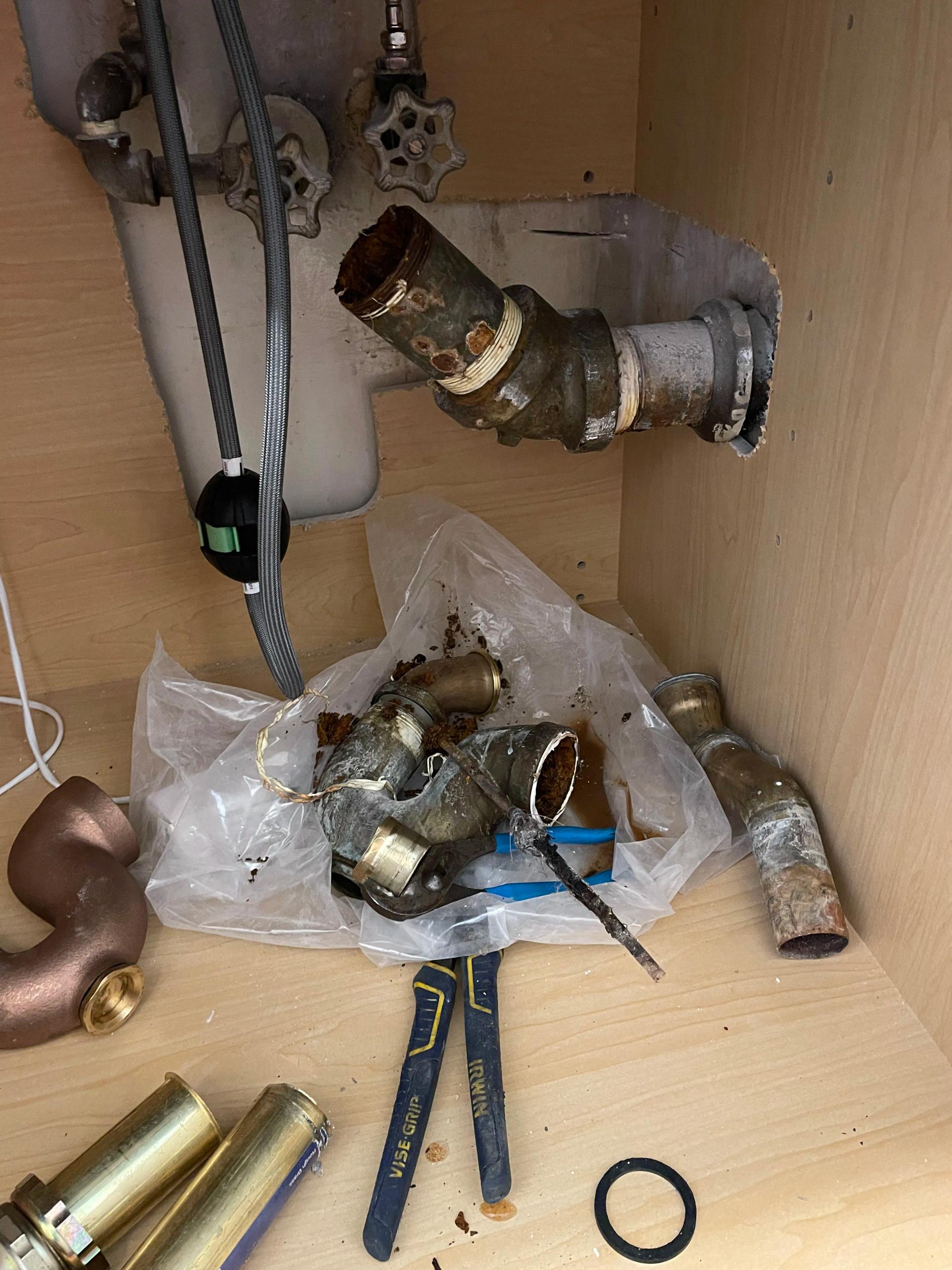
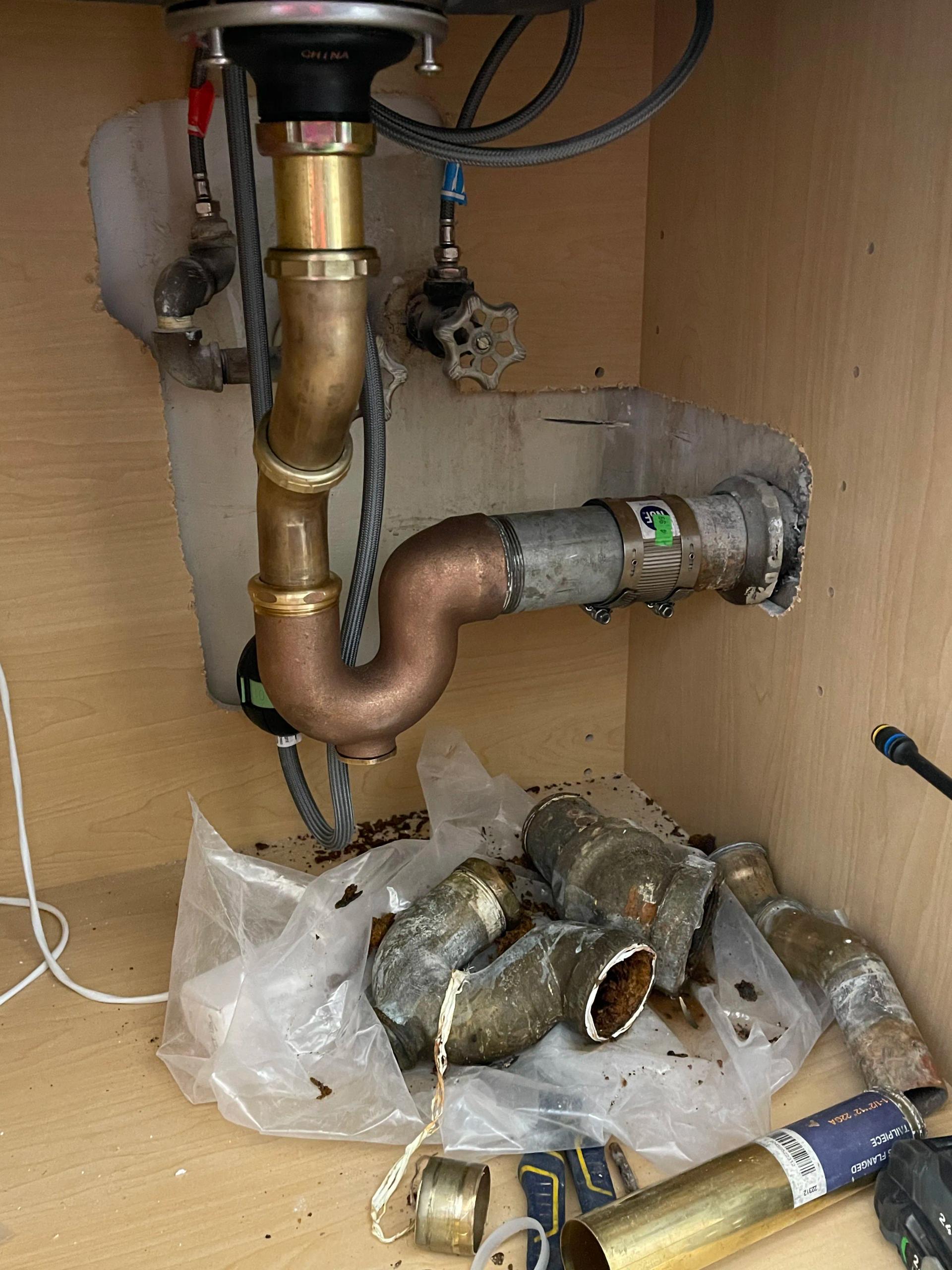
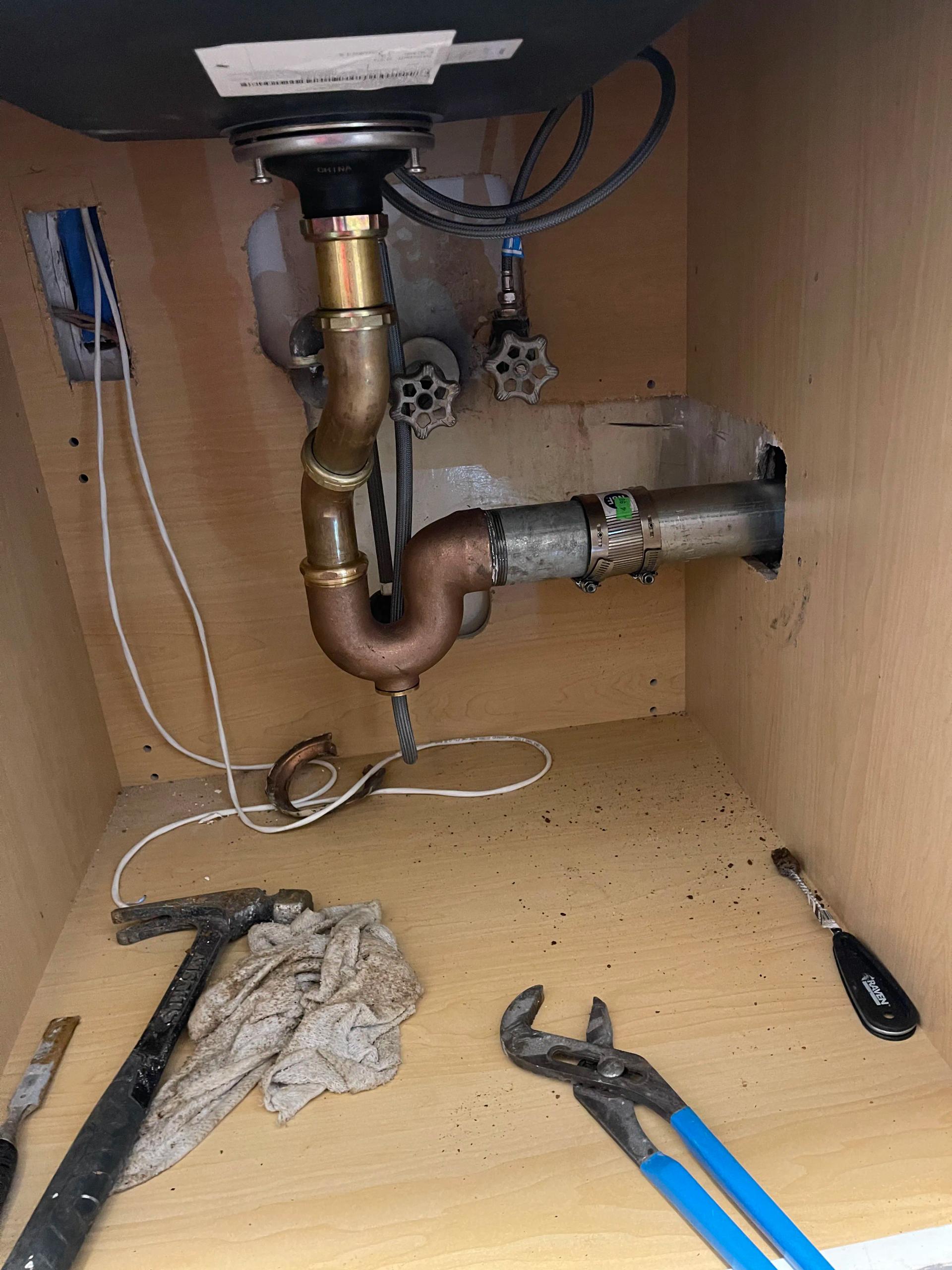
Sometimes the smallest fixes make the biggest difference. This kitchen sink had a worn-out brass trap that was way past its useful life - corroded, gunked up, and just waiting to cause a leak inside the cabinet.
Here's what we were working with: the old trap assembly was heavily corroded with buildup caked into the fittings. That kind of deterioration doesn't just slow your drain down - it creates weak points where leaks start. Usually by the time a homeowner notices water damage under the sink, the problem has been brewing for a while.
We pulled the old trap out and replaced it with a new tubular drain setup. The new brass p-trap sits clean and solid, connecting properly to the wall drain stub-out. No more corroded fittings holding things together by a thread. The drain now flows the way it should, and the connection points are tight and leak-free.
This is the kind of residential plumbing work that doesn't look glamorous, but it matters. A slow or dripping kitchen sink is usually a sign that something under the cabinet needs attention - not just a plunger. If you're noticing sluggish drainage, moisture in the cabinet, or fittings that look like what we pulled out of this one, don't wait on it.
Drain issues don't fix themselves. Getting ahead of a worn trap before it fails completely is a lot cheaper than dealing with water damage to your cabinet or subfloor later.